OpenAI says GPT-6 models can design proteins with reasoning and code; 35 of 322 lab-tested designs bound their targets
· OpenAI
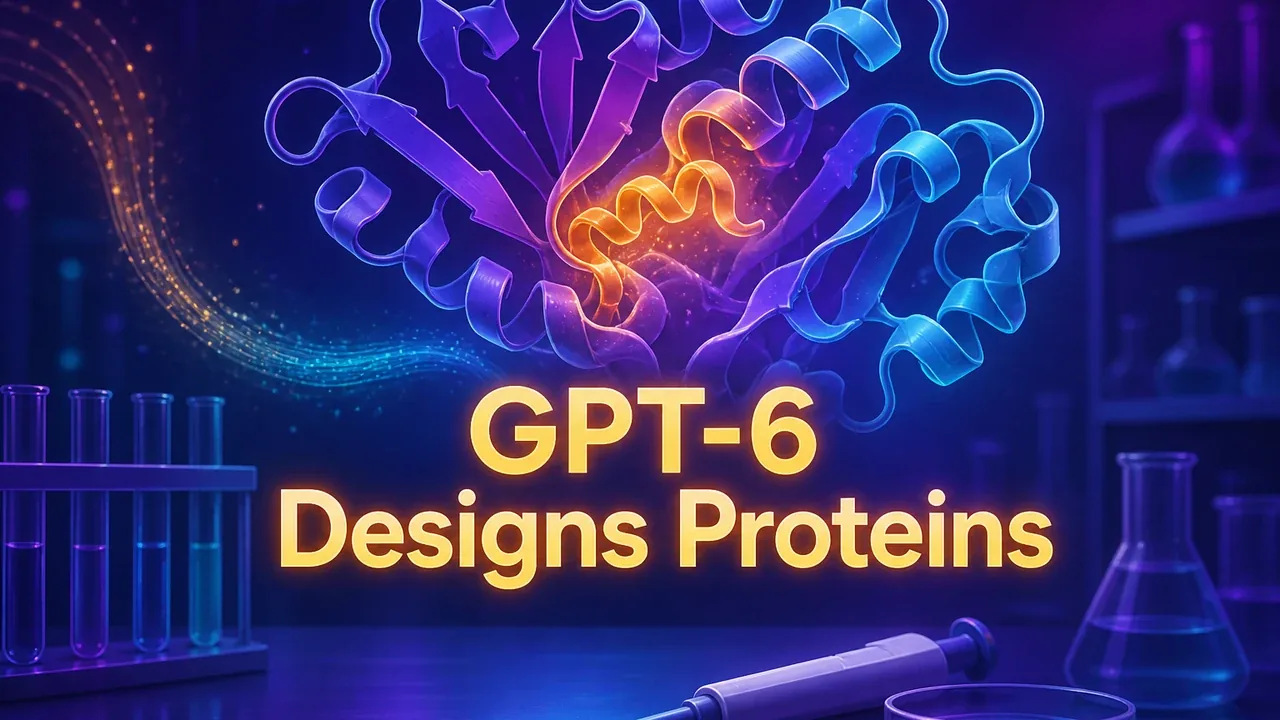
In a new preprint, OpenAI reports that GPT-6 models can design protein shapes and sequences using only reasoning and general-purpose code. In lab tests with Onava, 10.9% of 322 small proteins built from GPT-6.2 designs bound their intended targets.
Key numbers
- 35 of 322 minibinders that bound their target (10.9%)
- 5 targets, each with at least one hit
- 14 protein tasks in OpenAI's computational tests
What happened
On 24 November 2026, OpenAI published a preprint, GPT-6 as a Universal Foundation Model for Protein Biology: Beyond Specialized Models. It argues that general GPT-6 models can do parts of protein design that usually need specialised biology models.
Source: OpenAI — GPT-6 models demonstrate intrinsic protein-design capabilities
What the models did
Given a target protein and a marked attachment point, GPT-6.2 wrote and ran code to design the 3D shape of small binding proteins (minibinders), without calling a specialised design model. Researchers could steer the designs in plain language, for example by asking for a set number of coils or strands. Across 14 computational protein tasks, OpenAI's latest models matched or beat specialised models on most, but predicting a full protein structure from its sequence remained a clear weakness.
The lab results, with caveats
Partner Onava made and tested the proteins. Every one of the five targets (PD-L1, IL-7Rα, TrkA, VEGF-A and IL-17A) got at least one hit. In a second experiment GPT-6.2 wrote new sequences for known binders, and many still bound.
OpenAI is clear about the limits. Specialised models such as SolubleMPNN, Boltz-2 and ESMFold2 supplied sequences and filtered candidates, so this is not yet end-to-end design by GPT-6 alone. The hit rate is below the original RFdiffusion study, and binding is only an early step toward a useful medicine.
Why it matters: if one general model can handle several steps of protein design and be steered in plain English, scientists may need fewer specialised tools and less expertise to start a design project.
Source: https://openai.com/index/gpt-6-models-demonstrate-intrinsic-protein-design-capabilities/
Tags: Biology, GPT-6, OpenAI, Protein design, Science