Lithuania passes its EU AI Act enforcement law, naming regulators and a sandbox from 1 December 2026
· Lithuania Ministry of Economy and Innovation
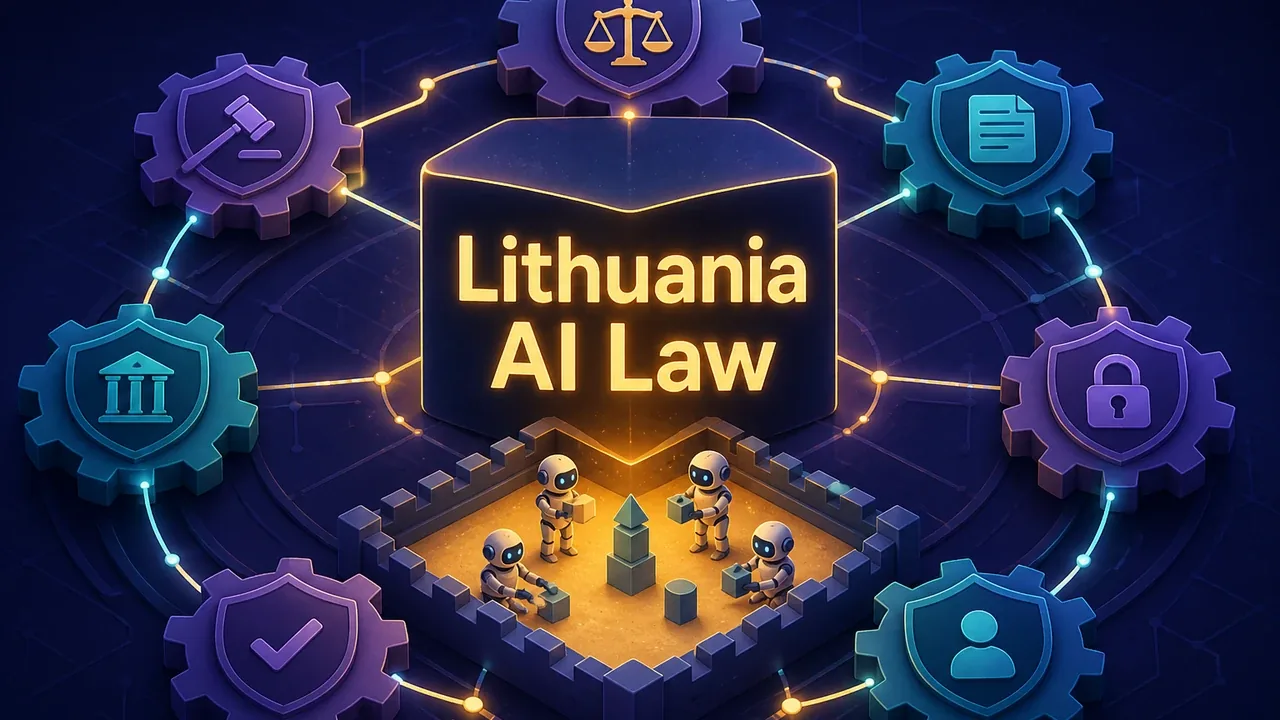
Lithuania's parliament adopted a law that sets out which bodies supervise and enforce the EU AI Act in the country, including a regulatory sandbox for testing AI. It takes effect on 1 December 2026.
Key numbers
- 1 Dec 2026 date the law takes effect
- RRT Communications Regulatory Authority, single point of contact
- Sandbox run by Lithuania's Innovation Agency
What happened
On 5 November 2026, Lithuania's parliament, the Seimas, passed a law prepared by the Ministry of Economy and Innovation to put the EU AI Act into practice in the country. It takes effect on 1 December 2026.
Source: Lithuania Ministry of Economy and Innovation — Seimas adopts AI supervision law (in Lithuanian)
Who does what
| Body | Role |
|---|---|
| Ministry of Economy and Innovation | Coordinates AI Act implementation |
| Innovation Agency | Sets up the AI regulatory sandbox |
| State Digital Solutions Agency | Helps develop the sandbox and guides the public sector |
| Sector market-surveillance authorities | Supervise high-risk AI systems in their fields |
| Communications Regulatory Authority (RRT) | Single contact point that coordinates the supervisors |
The ministry says the law puts weight on guidance and consultations so companies and public bodies can adapt to the new rules. Economy and Innovation Minister Edvinas Grikšas framed it as balancing technological progress with people's safety and rights.
Context: the EU AI Act applies directly in every member state, but each country must name the authorities that enforce it. Lithuania follows a common pattern: one coordinating ministry, sector regulators for high-risk uses, and a sandbox where companies can test AI under supervision.
Tags: AI sandbox, EU AI Act, Europe, Lithuania, Regulation